
Grand National Sweepstake
Run a Grand National sweepstake at work: what goes in the kit, how to draw horses fairly, how to split the pot and what to do when it goes wrong.
Running a Grand National sweepstake in a UK office
A Grand National sweepstake needs a list of runners, one slip per name, a hat, a fixed stake per person and agreed prize splits. Draw the horses in front of everyone, write down who has which runner, and settle the payout rules before the race starts. Keep the stake small and the rules in writing.
The Grand National lands in April, and for a lot of UK workplaces it is the one race of the year that gets the whole floor talking. People who never look at a racecard suddenly care about a horse because its name was pulled from a mug. That is the appeal of a sweepstake: nobody needs form knowledge, and everyone has a runner to shout at. A good kit keeps the draw fair and the admin light, so the organiser can enjoy the race too.
- A printed list of the declared runners with their numbers, once the final field is confirmed
- One slip of paper per runner, folded the same way so nobody can tell them apart
- A hat, mug or box big enough to shake properly
- A sign-up sheet with each entrant's name, the stake paid and the horse they drew
- A short rules sheet covering stakes, prize split and withdrawn horses
- An envelope or tin for cash, or a note of who has paid by bank transfer
- A pen, and a spare one
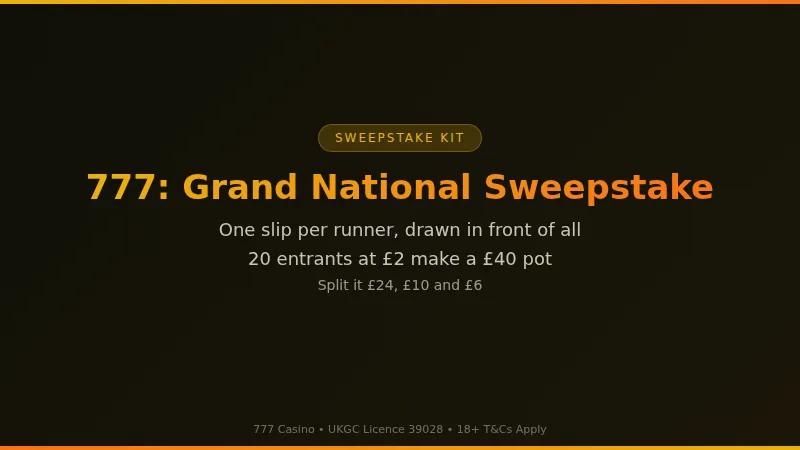
Keep the pot small and friendly. A £2 entry is the classic choice, and it makes the prizes easy to split three ways. Twenty entrants at £2 each make a £40 pot, and the chart below shows one way to share it out. Small stakes mean nobody feels pressured, and nobody minds much if their horse falls at the first fence.
20 entrants at £2 each, and every pound goes back out as prizes.
Common mistakes that spoil a sweepstake
Drawing in private
If the organiser pulls names alone, people wonder whether the draw was fair. Do it in front of everyone, or on a video call, and read each pairing out loud.
No rules in writing
Arguments start when a horse is withdrawn or the race is void and nobody agreed what happens. Put the answer on the rules sheet before the first slip is drawn.
Stakes that are too high
A sweepstake should feel like a laugh, not a commitment. Keep the entry small so colleagues on any budget are happy to join in.
Chasing payments afterwards
Collect the stake at the time of the draw. Chasing people for a couple of pounds after the race is awkward and slows the payout.
Leaving people out
Remote staff, part-timers and shift workers enjoy a horse as well. Share the sign-up sheet widely so everyone gets the same chance to take part.
Step by step: from sign-up sheet to payout
-
1
Confirm the field
Wait for the final declared runners, then write out the list with horse names and numbers. Count the runners so you know how many entrants you need.
-
2
Set the stake
Pick a small, fixed entry fee and tell everyone before they sign up. Decide whether one person may enter more than once.
-
3
Write the slips
Put one horse on each slip, fold them all the same way and drop them in the hat. Check them against the printed list.
-
4
Open the sign-up
Share the sheet at desks, in the group chat and on the noticeboard. Record each name next to the stake they have paid.
-
5
Hold the draw
Gather everyone, shake the hat and pull one slip per person. Read out each pairing and write it on the sheet straight away.
-
6
Share the results
Photograph the finished sheet and send it round, so everybody can see who has which horse and nobody needs to rely on memory.
-
7
Pay out
Once the placings are official, hand over the prizes you agreed and pin up the final result so the record is clear.
If you have more entrants than horses, let two people share a runner and split that prize, or keep a reserve list for a second draw. If you have fewer entrants than horses, let people draw two names each. Agree whichever option you prefer before the draw, not after it.
What people say about running one
Organisers who run a sweepstake year after year tend to say the same thing: the first year is the fiddly one, and after that the kit is reusable. Many keep the rules sheet and sign-up template in a folder and simply update the runners each April. The draw itself is often the best part, because the whole team gathers for ten minutes and the banter starts before the race does. Entrants like that it costs little, and that a horse nobody fancied can turn into the talking point of the day.
Strengths
- Everyone gets a runner, whatever their racing knowledge
- Low stakes keep the mood relaxed
- The draw brings the team together for a few minutes
- The same kit can be reused every April
Worth knowing
- Someone needs to organise the draw and look after the cash
- A few colleagues may prefer to just watch
What to do if it does not go to plan
- A horse is withdrawn before the race: apply the rule on your sheet, usually a redraw of that one slip or a refund of the stake.
- Someone has not paid: hold their slip back until the stake arrives, and offer it to another person if the deadline passes.
- Two people claim the same horse: check the sign-up sheet, because it is the record.
- The placings change after the finish: wait for the official result before paying any prize.
- The race is void or called off: refund every stake in full.
- Someone is unhappy with the split: point to the rules sheet that everyone saw when they signed up.
Most disputes come down to one missing line on the rules sheet. When one turns up, add it for next year and move on. A short, clear sheet beats a long one that nobody reads.
After the race: keep it light
A sweepstake is a bit of fun between colleagues, and it works best when it stays that way. If the race has made you curious about online play, the 777 Casino games page shows what to expect, and How to Sign Up at 777 Casino walks through opening an account. You can also read Is 777 Casino Legit? for the licence details in full.
| Studio | Popular titles |
|---|---|
| Playtech | 4 Cash Planes: Multiplayer, Busted or Bailed, Cash It |
| Evolution | Red Baron Live, Red Baron RNG, American Roulette by Evolution |
| Pragmatic Play | The Bingo Spot, Gameshow Party Jackpot Play, 3 Magic Eggs |
| NetEnt | Big Money Wheel, Babylon Riches, Beach Invaders |
| Red Tiger | 1942 Sky Warrior, 4Squad, 777 Diamond Strike |
| Big Time Gaming | Trigger Happy, Bonanza Falls, Book Of Gods |
- Operator
- 888 UK Limited
- UKGC account number
- 39028
- Casino licence activity
- Remote casino, active
- Slot stake limit, 25 and over
- £5
- Slot stake limit, ages 18-24
- £2
18+ New customers only. T&Cs apply.